Take a look at Non-Electric Hot Water Heater Options
In this guide, you’re about to explore practical no electricity water heater and see how they suit off-grid lifestyles, remote properties, and backup strategies for homes across the United States.
This introduction will cover alternative water heating options. You’ll look at tankless propane models, gravity-fed thermosiphon designs, wood-fired boilers, and solar water heating solutions. Discover why non-electric hot water heaters are reliable during outages, cost less to operate, and reduce grid dependence.
Throughout this article, you’ll see comparisons for performance, installation demands, safety, and U.S. code considerations. You’ll also learn about routine maintenance and long-term cost analyses. Expect clear guidance to help you choose off-grid water heating solutions that meet your cabin, tiny home, or rural property needs.
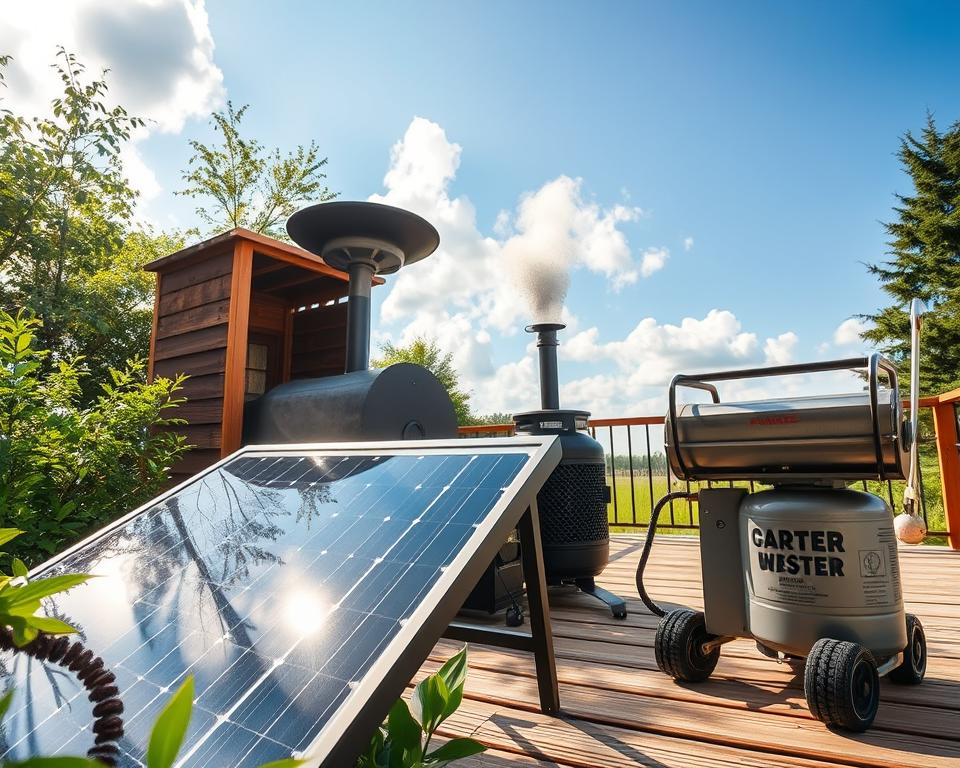
- No electricity water heaters supply dependable hot water without needing grid power.
- Non-electric hot water heaters cover tankless propane, thermosiphon, wood-fired, and solar-based designs.
- These alternative water heating options suit cabins, tiny homes, and remote properties.
- You’ll learn about installation, maintenance, safety, and U.S. code considerations in later sections.
- Picking a suitable system can cut running costs and boost household energy independence.
How no electricity water heaters work and what they do
There are several ways to get hot water without depending on grid power. Some systems employ direct combustion, while others use solar thermal or passive flow. All of these approaches focus on supplying steady hot water without powered controls or circulation pumps.
Core operating principles
Combustion-style units use propane, natural gas, or wood as fuel to heat water. They can provide heat on demand or keep heated water in an insulated storage tank. Tankless propane water heaters, on the other hand, heat water as it flows through a compact heat exchanger. As a result, fuel is burned only when there is actual water flow at a tap.
Tank systems maintain a reserve of hot water, while tankless designs rely on instant heat transfer. This strategy helps make sure hot water is ready whenever it’s needed.
Physical and chemical cleaning behavior in non-electric heaters
Certain non-electric hot water heaters rely on gravity-driven circulation to limit sediment buildup. They incorporate internal baffles and flow paths that guide particles towards drain points during use. This helps in maintaining water quality and reducing the need for manual maintenance.
Many of these systems additionally use chemical coatings or internal media in the tank. These coatings inhibit bacterial growth and scale formation without the need for powered filters. This results in fewer odors and less fouling of heat exchange surfaces, ensuring consistent hot-water delivery.
Common fuels and heat exchange techniques
Common fuels include propane, natural gas, wood, and solar thermal energy. Tankless propane water heaters often use compact counterflow or condensing-style heat exchangers. They are typically manufactured from materials such as copper or stainless steel.
Indirect-fired systems, on the other hand, use a coil or jacket around the tank. This coil or jacket transfers heat from a separate burner or boiler. Solar options capture heat using evacuated tube collectors or flat-plate panels.
Thermosiphon and gravity-fed setups circulate hot water without using pumps. They operate using natural convection and density differences. Many wood-fired units use direct-fired coils. These coils pass water through or around the combustion chamber for efficient heat transfer.
Advantages of selecting no electricity water heaters for your home
Switching to no electricity water heaters brings several practical advantages. These systems ensure dependable hot water, even in areas with unreliable grids. They work especially well for off-grid living, trimming how much you rely on utility power.
Reliability during power outages and in remote locations
No-electricity water heaters keep delivering hot water throughout grid failures. Tankless propane and wood-fired systems can provide on-demand or stored heat without electrical power. This combination is ideal for cabins, rural residences, and emergency-readiness setups.
Reduced operating costs and higher energy independence
Using non-electric systems often lowers your ongoing operating costs. In numerous areas, propane and firewood are more affordable than grid electricity. Solar thermal options capture free sunlight, further cutting costs and supporting long-term energy independence.
Maintenance reduction with self-cleaning design features
Some non-electric designs rely on physical agitation, engineered flow patterns, or small chemical doses to control scale and biofilm. These self-cleaning features reduce the need for descaling and sanitizing. This keeps performance steady and prevents unexpected service downtime.
| Benefit | How it helps your home | Best-fit systems |
|---|---|---|
| Reliability when the power goes out | Hot water continues during grid failures; supports safety and comfort | Tankless propane, wood-fired, gravity-fed |
| Lower operating costs | Cuts power bills and can lower long-term fuel expenses | Propane tankless units, solar thermal systems, wood boilers |
| Energy independence | Decreases dependence on utilities and works well for off-grid living | Solar thermal paired with no electricity water heaters |
| Reduced maintenance | Self-cleaning features limit scale and bacteria, reducing manual maintenance | Passive flow tanks, chemically treated storage, thermosiphon loops |
| Efficiency improvements | Lower fuel use and waste with smart heat exchange | High-efficiency wood-burning stoves and modern tankless units |
Off-grid water heating solutions for sustainable living
Off-grid living calls for a reliable water heater to maintain comfort and independence. These off-grid solutions blend straightforward physics with reliable fuel options. They help ensure hot water in remote locations such as cabins, tiny homes, and rural properties. In this section, you’ll find practical choices and sizing tips tailored to real-world use.
Integration with off-grid solar power and battery-free setups
With solar thermal collectors, water is heated directly, so batteries are unnecessary. Passive systems such as thermosiphon loops rely on gravity and temperature differences to circulate fluid. These systems are durable when installed correctly, with the right tilt and insulation.
You can pair solar thermal with a tankless propane unit or gravity-fed heater as a backup. This hybrid strategy uses solar power on sunny days and non-electric backup on overcast days. Manufacturers such as Rheem and Bosch supply tankless propane models that suit off-grid living.
How to size off-grid water heating systems
Begin by estimating peak flow based on fixtures and their GPM. Efficient showerheads typically use about 1.5–2.5 GPM. Multiply peak demand by usage hours to determine tank size for solar collectors.
Factor in the collector area, storage volume, and local fuel availability. For a small two-person cabin, a 30–40 gallon tank paired with 20–40 square feet of collector area is often enough. Bigger households typically demand greater collector area and/or a bigger tank. When you select a tankless unit, verify that it can handle your groundwater temperature and desired flow rate.
Use cases: cabins, tiny houses, and rural properties
Many small cabins make use of compact tankless propane heaters or simple single-panel thermosiphon systems. Tiny homes tend to favor tankless options to save space and avoid heavy storage tanks. Combi setups, combining solar with propane, offer efficiency and reliability.
Some rural properties select wood-fired or indirect-fired boilers, especially where wood heating is already common. They can integrate with existing plumbing to provide abundant hot water for washing and bathing. Choose well-tested components and keep up with regular maintenance to maintain dependable off-grid systems.
Types of non-electric hot water heaters and how they compare
When you need hot water without relying on the grid, you have several practical options. This overview helps you understand the trade-offs between compact on-demand units, simple passive systems, and fuel-driven tank solutions. It’s important to match the system to your site conditions, fuel availability, and your comfort with maintenance.
Tankless propane and natural gas options
Tankless propane water heaters supply on-demand hot water. They are available in different sizes, from small units delivering about 2–6 GPM to larger models that can supply 8–10+ GPM for whole-house coverage. These units are compact, fitting well in tight spaces like mechanical rooms or tiny homes. Ensure proper venting and combustion air when installing in the United States to prevent backdrafts and ensure safe combustion.
Thermosiphon and gravity-fed water heater systems
A gravity-fed thermosiphon system relies on physics for circulation. Warm water rises, and cooler water sinks, creating a passive flow when the tank is above the heat source. Thermosiphon solar systems move heated fluid without pumps, making them ideal for low-maintenance setups. They perform best where there is a natural elevation difference and when you want a quiet, pump-free option.
Indirect-fired and wood-fired water heaters
Indirect-fired systems rely on a boiler or stove that heats a coil located inside a separate storage tank. By separating combustion from potable water, this setup reduces corrosion and scale issues. Wood-fired options include batch boilers and continuous-feed back boilers that heat water directly. Batch-style units call for regular loading and more direct attention. Continuous-feed units can run for longer periods but need consistent fuel quality and routine ash removal.
| System type | Typical Flow or Output | Best application | Maintenance needs |
|---|---|---|---|
| Tankless propane water heaters | Around 2–10+ GPM | Tiny homes, cabins, primary homes with good venting | Annual burner and vent check |
| Gravity-fed thermosiphon | Low to moderate; depends on site layout | Off-grid solar setups and simple cottages | Minimal; check fittings and freeze protection |
| Indirect-fired (coil-based) systems | Varies by boiler size | Homes already using a boiler or wood stove | Regular boiler/coil inspections and basic water quality management |
| Direct wood-fired systems | Batch: intermittent output; continuous: steadier output | Remote cabins, properties with wood supply | Chimney sweeping, ash removal, feed control |
Choose a system based on your daily hot water needs, space constraints, and fuel availability. For low-maintenance operation, a gravity-fed thermosiphon or smaller tankless propane unit can be a good match. If you want more independence from fossil fuels and robust performance, choose a wood-fired or indirect-fired system and be ready for additional hands-on care.
How tankless propane water heaters perform and how to install them
Tankless propane units heat water on demand, using flow-activated burners and modulating gas valves. Opening a tap activates a sensor that tells the burner to fire. Energy moves through the heat exchanger directly into the water, delivering continuous hot water and avoiding storage losses. The temperature of incoming water determines your achievable flow rate and final outlet temperature.
On-demand hot water delivery in tankless units
Flow sensors register even small draws and adjust the modulating gas valve so heat output matches the flow. This maintains a stable output temperature over changing demand levels. Heat exchangers, usually made of stainless steel or copper, resist corrosion and speed heat transfer. The outcome is efficient hot water for showers, dishwashing, and laundry, without the standby losses of storage tanks.
Venting, safety, and code issues in the United States
Safe operation depends heavily on proper venting. Depending on the model and location, installations may need direct, power, or atmospheric venting. You must also provide enough combustion air and follow carbon monoxide safety guidelines, including alarms in living areas. Many local plumbing and mechanical codes are based on the International Residential Code; always follow local amendments and secure permits and inspections.
Installation tips and common maintenance tasks
Use a licensed plumber or HVAC technician for gas-line hookups so that pressure and safety requirements are met. Maintain specified clearances and install the correct venting components per the manufacturer. In regions with hard water, a whole-house softener or inline filter helps reduce scale on the heat exchanger.
An annual inspection should evaluate burner performance, check for gas leaks, and confirm that vents are intact. When mineral accumulation begins to cut flow or temperature gain, descale the heat exchanger. Routine maintenance keeps non-electric hot water heaters and no electricity water heaters running efficiently and extends their service life.
| Topic | Recommendation | Reason it matters |
|---|---|---|
| Gas-line installation | Use a licensed professional | Helps guarantee proper pressure, leak-free joints, and code compliance |
| Venting type | Follow manufacturer instructions and local code for direct, power, or atmospheric venting | Prevents backdraft, CO buildup, and maintains efficiency |
| Water treatment | Use a filter or softener where water is hard | Reduces scale on heat exchangers and preserves flow rates |
| Routine service | Schedule yearly inspections and descale when required | Helps maintain performance and avoids early failures |
| Safety devices | CO detectors and proper combustion air | Protects occupants and meets code requirements |
Using solar water heaters as alternative water heating systems
Solar thermal technology is a practical method to cut fuel costs and reduce carbon emissions. You can pair rooftop solar collectors with existing tanks or choose systems built specifically for off-grid use. This section compares system types, discusses cold-climate safeguards, and explains how to combine solar with non-electric backups.
Overview of active versus passive systems
Active systems use a pump and controller to move heat-transfer fluid between collectors and storage tanks. They offer precise control, higher efficiency in varied sun conditions, and easier integration with large tanks. Expect a higher component count and a modest electrical draw for the controller and pump.
Passive systems instead use natural convection forces. Designs such as integral collector-storage units and thermosiphon setups move warm water into a tank without electricity. These systems often have long lifespans and require minimal maintenance. They perform best where roof and tank placement support gravity flow.
Designs that manage freezing and cold conditions
In cold climates, freeze protection is essential. Drainback systems drain collectors when the pump shuts off, which helps prevent freeze damage. Closed-loop designs circulate propylene glycol antifreeze through a heat exchanger to protect potable water. Special freeze-tolerant collectors provide extra durability in severe winter climates.
Choose frost-resistant collectors and components sized correctly for your climate. Inspect valves, pumps, and glycol strength regularly so performance stays high and mid-winter failures are avoided.
Combining solar thermal with non-electric backup heaters
Combining solar thermal panels with a tankless propane or wood-fired heater gives you backup capacity. Solar thermal covers day-to-day loads and preheats water in sunny conditions. On cloudy days or during peak demand, the non-electric backup unit covers the shortfall without relying on grid power.
Such a hybrid strategy is well suited to off-grid water heating and supports energy-efficient operation by cutting annual fuel use. Design your control scheme so the backup heater activates only when stored water falls under the target temperature.
Eco-friendly and energy-efficient water heating systems
You seek a hot water solution that minimizes waste and preserves water quality over time. Contemporary manufacturers use advanced materials together with inventive designs. The outcome is efficient non-electric hot water heaters and hybrid systems that require little effort to run. These options significantly reduce your home’s environmental impact while maintaining high performance.
Materials and coatings that reduce bacterial growth and scaling
Many models feature stainless steel tanks or vitreous enamel linings that resist corrosion and reduce sediment buildup. Copper-based heat exchangers and antimicrobial coatings discourage bacterial buildup. The internal tank design and inlet diffusers also help to keep sediment away from heating elements, ensuring water quality in non-electric hot water heaters and other systems.
Design features that increase efficiency and reduce waste
Well-insulated tanks and low-standby-loss designs limit heat loss, trimming fuel consumption. Efficient heat exchangers transfer energy from propane, wood, or solar loops into the water very effectively. Gas-fired units with condensing combustion capture latent heat from exhaust gases. Thermostatic controls and smart mixing valves optimize fuel use by maintaining consistent temperatures without excessive overshooting.
Environmental impact and lifecycle factors
After installation, solar thermal systems operate with essentially zero direct emissions. Though propane and natural gas units emit CO2 while running, they often outperform older, less efficient models in cleanliness. Wood-fired heaters emit CO2 and particulates, with overall impact shaped by fuel quality and combustion efficiency. Keep component lifespan in mind; stainless steel tanks may last decades, whereas other parts may require earlier replacement. Using recyclable metals and practicing diligent maintenance also helps reduce lifecycle waste in efficient water heating systems.
When evaluating options, consider operational emissions, material durability, and maintenance waste. This perspective helps you pick eco-friendly water heaters suited to your financial plans and sustainability objectives.
How to choose the right no-electric unit for your needs
Choosing the right system for off-grid living water heaters requires a detailed look at your hot water usage. Small choices now can influence comfort, cost, and installation complexity later. Use the following checklist and table to identify a unit that fits your household’s needs, available space, and fuel options.
Figuring out hot water demand and peak GPM
Estimate the gallons per minute (GPM) for each fixture that could be running simultaneously. A shower typically needs 1.5–2.5 GPM, a kitchen sink 1–1.5 GPM, and a dishwasher about 1–1.5 GPM. Add the flows for simultaneous uses to find your peak GPM.
Measure incoming groundwater temperature. The colder the inlet water, the more output you’ll need to reach a comfortable shower temperature. Use your desired output temperature and inlet temperature to size both tankless and tank systems correctly.
Checking space, venting, and fuel before you buy
Check available indoor and outdoor installation space and clearances. Confirm vent termination options for combustion units and whether you can meet code-required clearances for manufacturers like Rinnai or Bosch.
Verify on-site fuel: propane tanks, natural gas lines, or wood supply. If you’re considering combined systems, evaluate whether your roof orientation and tilt are suitable for solar collectors. Also confirm safe, convenient access for servicing and regular maintenance.
Budget ranges and long-term cost comparison
Look at both upfront price and lifecycle cost for the main no electricity water heater types. Tankless propane units usually cost less to purchase and install than full solar collector arrays. Solar collectors plus storage tanks require a higher initial investment but offer lower ongoing fuel costs.
Include maintenance, fuel, and expected lifespan when doing your calculations. Self-cleaning or no-electric tank designs can reduce descaling and lower service frequency, which improves long-term value for remote sites.
| System Type | Typical upfront cost (USD) | Estimated lifetime (years) | Fuel & Maintenance Notes |
|---|---|---|---|
| Tankless propane | \$800–\$2,500 | 10–15 | Propane supply required; periodic burner cleaning; good for high GPM when sized correctly. |
| Passive solar collectors with tank | \$2,000 – \$8,000 | 15 – 25 | Minimal fuel costs; freeze protection needed in cold climates; roof space and orientation important. |
| Wood-fired heater (indirect) | \$1,200 – \$5,000 | 15–30 | Requires steady wood supply; simple mechanics; more frequent inspection and ash removal. |
| No-electric tank designs with self-cleaning | \$900 – \$3,500 | 12–20 | Reduced descaling requirements; ideal for limited service access; pairs effectively with solar or wood backups. |
When selecting no-electric unit options, balance peak flow requirements, fuel availability, and site constraints. Focus on systems that meet your day-to-day needs and long-term budget for reliable hot water in off-grid living water heater arrangements.
Safety, code requirements, and maintenance for non-electric heaters
Choosing a non-electric water heater requires you to prioritize safety and maintenance as much as performance. Regular upkeep keeps efficiency high and minimizes risk. Knowing local regulations and following basic safety guidelines helps protect your home and family.
Put a seasonal maintenance checklist in place. Inspect vents and flues for corrosion or blockages. Flush tanks or heat exchangers to clear out sediment. Check pressure-relief valves and test them annually. Monitor for scale and descale when necessary. Ensure self-cleaning features function to control bacterial and dirt buildup.
Apply a few straightforward precautions to keep combustion-based systems safe. Place carbon monoxide detectors close to bedrooms and near the heater. Maintain open ventilation paths and combustion air supplies. Have a qualified technician inspect burners and heat exchangers annually. Store propane cylinders upright, away from living spaces, and keep firewood off the structure and clear of vents.
Compliance with local water heater codes is critical. Check regulations for venting, combustion air, clearances, and seismic strapping. Many jurisdictions require permits for gas or wood installations and demand final inspections. Before beginning, reach out to your local building department and use licensed contractors for gas and other combustion installations.
For maintaining no electricity water heaters, put a regular service plan in place. Do a visual check each month and book professional servicing every year. Maintain records of inspections, repairs, and replaced parts. Proper upkeep lengthens equipment life and reveals issues before they turn into costly failures.
Adhere to manufacturer guidelines and national standards from agencies like the National Fuel Gas Code (NFPA 54) and local amendments. Observing water heater codes and non-electric heater safety practices cuts hazards, keeps you compliant, and supports long-term reliability.
Upfront cost and long-term savings comparison for alternative water heating systems
When deciding between propane tankless, solar thermal, and wood-fired or indirect systems, it’s essential to consider both upfront costs and long-term savings. Every option presents distinct purchase costs, installation challenges, and maintenance requirements. Factors like roof-mounted collectors, venting runs, and gas-line work significantly influence the final costs.
Breaking down initial purchase and installation costs
Tankless propane units typically range from \$700 to \$2,500. Installation costs, including gas-line upgrades and venting, can add \$500 to \$2,000. Solar thermal systems cover a wide price range, with collectors, tanks, and controls running about \$4,000–\$12,000, plus extra roof and piping costs. Wood-fired or indirect setups, with boiler and storage tank, generally cost \$2,500–\$8,000 based on materials and how complex the installation is.
Operating costs, fuel expenses, and expected lifespan
Propane costs vary by region and involves steady annual fuel bills and periodic maintenance. Wood-fired systems require handling fuel and maintaining a seasonal supply, which can be economical where wood is inexpensive. Solar thermal systems have negligible ongoing fuel costs once installed, but you should budget for pump and control repairs. Lifespans vary: 10–20 years for tankless propane, 15–30 years for solar collectors and tanks, and 15–25 years for well-built wood-fired or indirect systems. Self-cleaning tank designs can reduce maintenance and lower lifetime costs.
Incentives, rebates, and tax credits for eco-friendly installations
In many areas, federal, state, and local incentives can greatly reduce the net cost of energy-efficient and solar thermal systems. Check the Database of State Incentives for Renewables & Efficiency and talk with your utility about possible rebates and tax credits. Because incentives frequently change, always confirm the latest programs before committing to a system.
| System type | Typical equipment cost | Typical Installation Cost | Annual Fuel/Operating Cost | Expected Lifespan |
|---|---|---|---|---|
| Tankless propane | \$700–\$2,500 | \$500–\$2,000 including venting and gas-line work | Moderate; propane market-dependent | 10–20 years |
| Solar Thermal | \$4,000–\$12,000 (collectors, tank, controls) | \$1,000–\$4,000 (roof work, piping) | Minimal fuel cost; maintenance for pumps/controls | 15–30 years |
| Wood-fired or indirect | \$2,500–\$8,000 including boiler and tank | \$800–\$3,000 for chimney, piping, and labor | Low to moderate; wood cost and labor | 15–25 years |
Final thoughts
There are multiple practical choices for no electricity water heaters, such as tankless propane, solar thermal, thermosiphon, gravity-fed, indirect-fired, and wood-fired units. Base your choice on climate conditions, fuel access, and everyday hot water needs. Every type offers different trade-offs related to installation, required space, and response speed.
Off-grid water heating solutions like these deliver obvious advantages. You gain reliability during outages, can save on operating costs, and boost your energy independence. Many eco-friendly water heaters also use smart materials and passive cleaning to reduce scaling and bacterial buildup, which trims routine maintenance.
To make a sound decision, evaluate your peak flow rates, venting or fuel options, local building codes, and budget. Consider hybrid setups such as solar paired with a non-electric backup for the best mix of sustainability and reliability. For safety and code compliance, work with a licensed plumber or HVAC professional to size and install your system properly.